𝗗𝗲𝗰𝗿𝗶𝗺𝗶𝗻𝗮𝗹𝗶𝘀𝗮𝘁𝗶𝗼𝗻 𝗼𝗿 𝗗𝗲𝗹𝗲𝗴𝗮𝘁𝗲𝗱 𝗖𝗿𝗶𝗺𝗶𝗻𝗮𝗹𝗶𝘀𝗮𝘁𝗶𝗼𝗻? 𝗔 𝗖𝗼𝗻𝘀𝘁𝗶𝘁𝘂𝘁𝗶𝗼𝗻𝗮𝗹 𝗤𝘂𝗲𝘀𝘁𝗶𝗼𝗻 𝘂𝗻𝗱𝗲𝗿 𝘁𝗵𝗲 𝗦𝗲𝗰𝘂𝗿𝗶𝘁𝗶𝗲𝘀 𝗠𝗮𝗿𝗸𝗲𝘁𝘀 𝗖𝗼𝗱𝗲
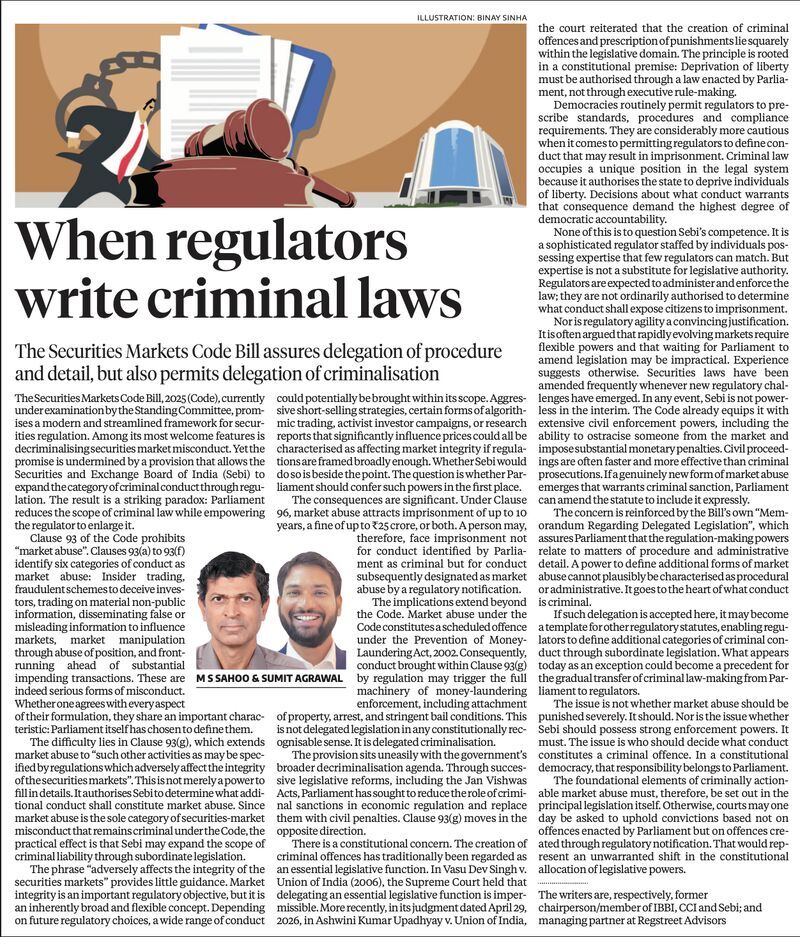
Business Standard features an article titled “When regulators write criminal laws”, authored by Dr. M. S. Sahoo and Mr. Sumit Agrawal.
The article examines a significant constitutional concern arising under the proposed Securities Markets Code Bill, 2025. While the Code seeks to decriminalise securities market regulation by retaining criminal liability only for “market abuse”, it simultaneously empowers the Securities and Exchange Board of India (SEBI) to expand the scope of what constitutes market abuse through regulations.
The authors focus on Clause 93(g), which permits SEBI to specify “such other activities” that adversely affect the integrity of the securities markets. They argue that this goes beyond delegated legislation and effectively enables delegated criminalisation, allowing the executive to determine conduct that may attract imprisonment.
The article notes that this assumes greater significance because market abuse under the Code carries imprisonment of up to ten years and may also trigger proceedings under the Prevention of Money Laundering Act, 2002.
Consequently, conduct designated through regulation may expose individuals not only to criminal prosecution but also to attachment of property, arrest, and stringent bail conditions.
Drawing upon the Supreme Court’s decisions in Vasu Dev Singh v. Union of India and Ashwini Kumar Upadhyay v. Union of India, the authors contend that the creation of criminal offences and prescription of punishments constitute essential legislative functions that cannot be delegated to the executive.
The article further observes that the proposed framework appears inconsistent with the Government’s broader decriminalisation agenda reflected in the Jan Vishwas reforms. While regulatory flexibility is important, the authors argue that criminal liability must remain rooted in parliamentary enactment rather than subordinate legislation.
The article concludes that the issue is not whether market abuse deserves stringent punishment or whether SEBI should possess strong enforcement powers. Rather, it asks a more fundamental constitutional question: who should decide what conduct constitutes a criminal offence? In a constitutional democracy, the authors submit, that responsibility must remain with Parliament.
The full article can be accessed at https://lnkd.in/dTx7mRiF
Readers can share their views at info@regstreetlaw.com